


How to clean off burnt-on oil
An extended cook at high temperatures can lead to some cooked on oil on your pan. It doesn't come off easily with just a sponge and soap - but a quick couple of tips will get your pan clean in no time.
 Fig. 01 · How to clean off burnt-on oil
You seared something great last night. The pan is washed, it's clean to the touch — and there's still an amber-to-brown stain across the bottom that soap and scrubbing won't budge. It looks like you've damaged the pan. You haven't. This is burnt-on oil, it's probably the most common cleaning question we get, and it always comes off.
What it actually is
When cooking oil gets pushed past its comfort zone — too hot, for too long — it stops being oil. The molecules bond to each other and to the metal in a process called polymerization, forming a hard, lacquer-like varnish. If you've ever seasoned a cast iron skillet, this is the exact same chemistry; it just showed up without being asked.
That's why dish soap does nothing here: soap is built to lift oil, and this is no longer oil. It's a finish. Getting it off is a matter of abrasion and chemistry, not more passes with a soapy sponge.
And to be clear — it's purely cosmetic. The pan heats the same, cooks the same, releases the same. You're cleaning it because you want it looking new with a fully clean cooking surface.
How to prevent it in the first place
Start from a fully clean pan. If after the previous cook the pan got cleaned but maybe not all that diligently, there may still be some oil left on it. When you then go to fully preheat the pan, this leftover oil can easily get baked on.
Heat that never comes down. Sear-level heat is for starting, not finishing. Oil that sits at smoking temperature polymerizes fast; once the crust is set, let the pan coast.
Aerosol cooking sprays. Repeat offenders. The lecithin in most sprays varnishes at temperatures well below where regular oils misbehave — especially up the sidewalls, where it never gets wiped through. Pour your oil instead.
The removal ladder
Start at the rung that matches the mess and escalate. Most burnt-on oil ends at rung three.
- Hot soak, hard scrub. Hot water, dish soap, the scrubby side of the sponge — or a stainless steel scrubbie — and real pressure. Catches fresh, thin films.
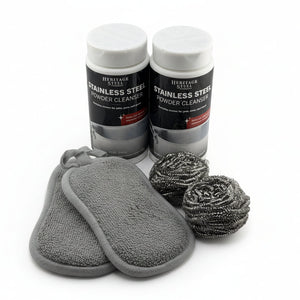
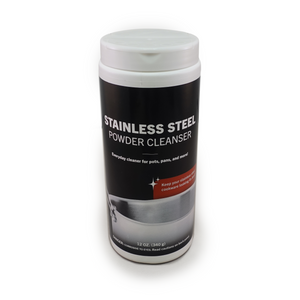
- Cleansing-powder paste. The workhorse. Sprinkle powder cleanser (Bar Keepers Friend works too) onto the damp pan and work it in small, overlapping circles with a paper towel. Rinse, inspect, repeat on the stubborn patches. The fine abrasive and mild acid break down what soap can't. The powder, dual-sided sponges, and scrubbies all come together in our Cleaning Kit.
- Oven cleaner. The nuclear option, for heavy carbonized buildup. Gloves and fresh air, spray it on, seal it in a trash bag, and give it 20 minutes to an hour per the label, then wash thoroughly with soap and water — twice. It's aggressive, but the steel doesn't care. Full emergency walkthrough: Help — I think I killed my pan.
Keeping it from coming back
Wash with soap, not just water, so no film survives to bake on. Once the sear is set, drop the heat and let the pan coast. Skip the aerosol sprays. And when you do spot a thin amber shadow forming, hit it with the powder paste early — a fresh layer comes off in a minute; a year of layers takes an afternoon.
In the grand scheme of cleaning, this is Level 2 territory — something you won't do often, but it's good to know how. For the full triage, see The 3 levels of cleaning. And if the discoloration you're looking at is blue-and-purple rather than brown, that's not oil at all — it's heat tint, and it's an easier fix: How to clear rainbow tint.